
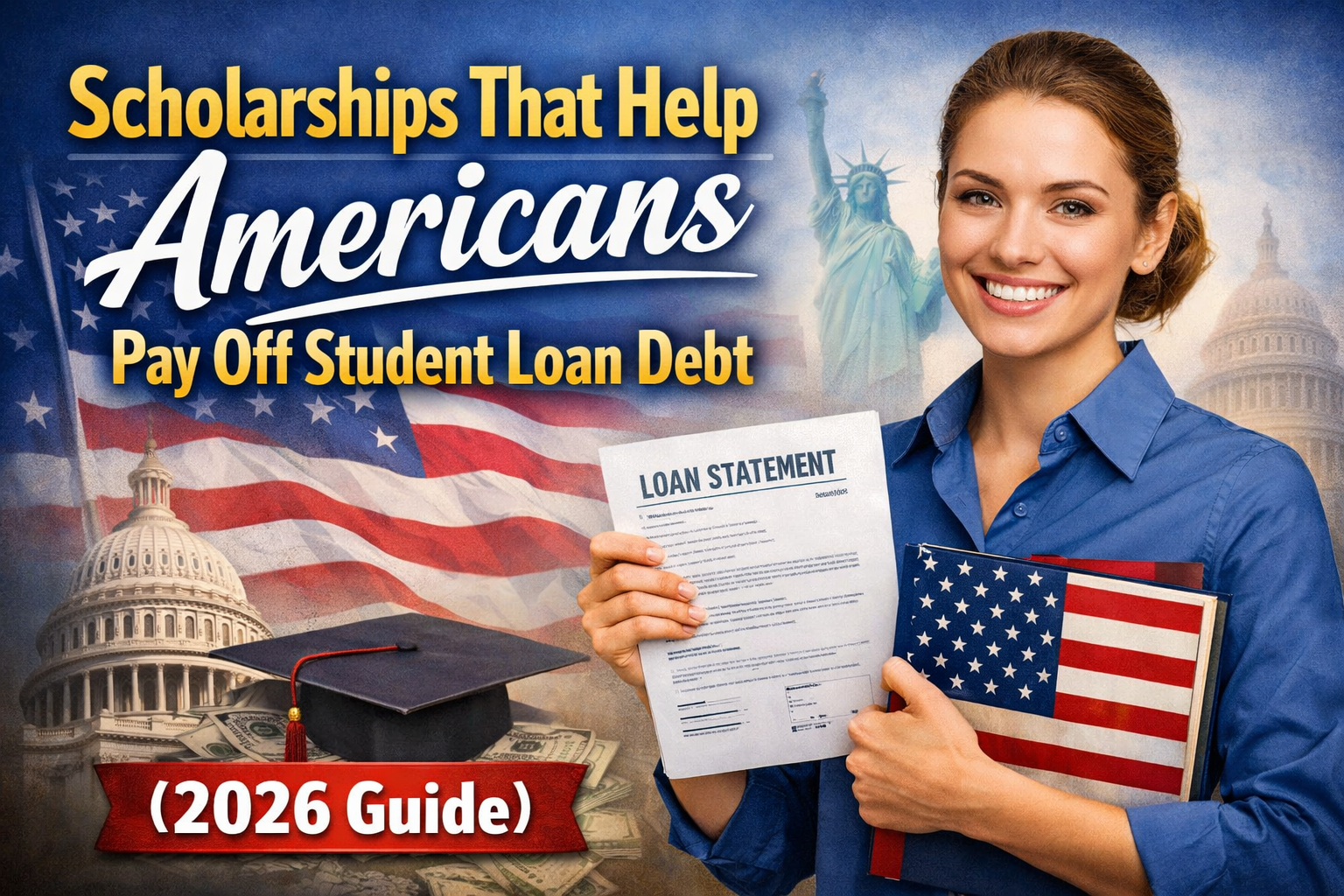
Why Programs That Help Pay Off Student Loans Matter
Student loans were originally designed to make higher education accessible. However, over time, the cost of college has risen dramatically. Tuition, housing, books, and other expenses have increased much faster than wages.
Many students graduate with debt ranging from $20,000 to over $100,000, depending on their degree and institution. For students in fields such as medicine, law, or graduate programs, debt can exceed $200,000.
High levels of student debt can affect many aspects of life:
- Delaying home ownership
- Postponing marriage or family plans
- Limiting career choices
- Reducing the ability to save or invest
Because of this, scholarships and programs that reduce student loan debt have become extremely valuable.
These programs often reward individuals who contribute to society through public service, healthcare, education, or community development.
Public Service Loan Forgiveness (PSLF)
One of the most powerful programs available in the United States is Public Service Loan Forgiveness (PSLF).
This program was created to encourage people to work in public service careers such as government, education, and nonprofit organizations.
Under this program, borrowers who work full time for a qualifying employer and make 120 qualifying monthly payments on their federal student loans may have the remaining balance completely forgiven.
This means that after approximately 10 years of payments, the remaining debt can be erased.
Qualifying employers include:
- Federal government agencies
- State government offices
- Local government organizations
- Public schools and universities
- Nonprofit organizations
Many professionals benefit from PSLF, including:
- Teachers
- Nurses
- Social workers
- Police officers
- Firefighters
- Government employees
One of the biggest advantages of PSLF is that the forgiven amount is not considered taxable income, which means borrowers do not have to pay taxes on the forgiven debt.
For many borrowers with large student loan balances, PSLF can eliminate tens of thousands of dollars in debt.
Teacher Loan Forgiveness Program
Teachers who work in low-income schools may qualify for the Teacher Loan Forgiveness Program.
This program helps educators reduce their student loan debt after teaching full-time for five consecutive years in a qualifying school.
Depending on the subject taught and the teacher’s qualifications, borrowers may receive up to:
- $17,500 in loan forgiveness for highly qualified math or science teachers and special education teachers
- $5,000 in loan forgiveness for other eligible teachers
Schools that qualify are typically those serving low-income communities.
The goal of this program is to encourage talented teachers to work in schools where they are most needed.
National Health Service Corps Loan Repayment Program
Healthcare professionals can benefit from one of the most generous debt repayment programs available in the United States.
The National Health Service Corps (NHSC) Loan Repayment Program offers significant loan repayment assistance to healthcare workers who agree to serve in areas with shortages of medical professionals.
Participants may receive up to $75,000 in student loan repayment assistance in exchange for working in designated underserved communities.
Eligible professionals include:
- Physicians
- Nurse practitioners
- Dentists
- Mental health professionals
- Physician assistants
These professionals provide essential care to communities that struggle to attract healthcare providers.
For many healthcare workers, this program significantly reduces student debt while allowing them to gain valuable professional experience.







Leave a comment