

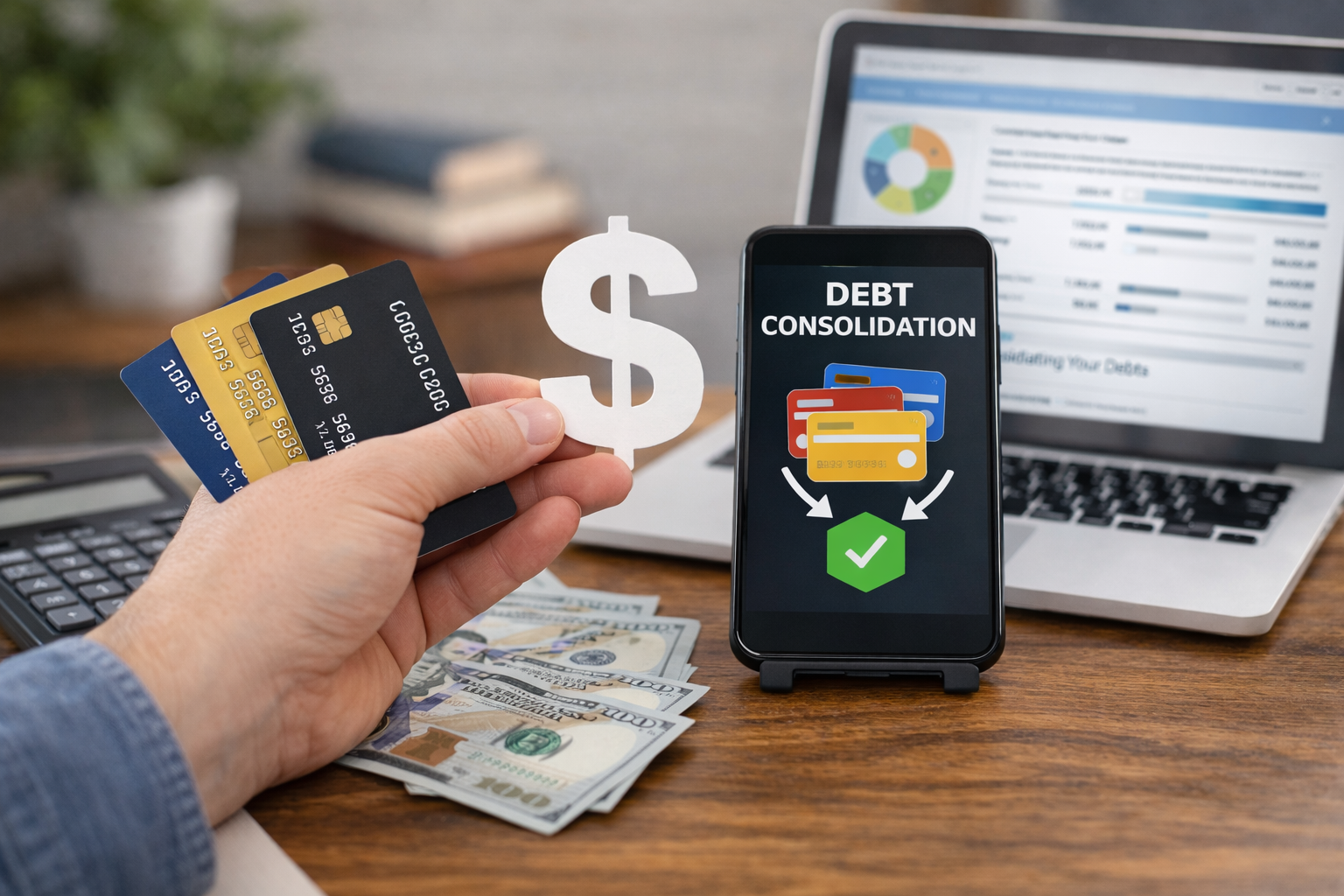
Debt consolidation works by replacing several credit card payments with one payment that is easier to manage. This allows you to focus your effort on paying down the total debt without juggling multiple accounts.
One common way people consolidate credit card debt is through a balance transfer credit card. This type of card allows you to move balances from other credit cards onto a single new card. Many balance transfer cards offer a temporary period with very low or even zero interest. During this time, most of your payment goes directly toward reducing the balance rather than paying interest.
For example, imagine someone has three credit cards with balances of £2,000 each. Each card charges high interest, and the person struggles to reduce the balances because interest keeps accumulating. If they transfer those balances onto a balance transfer card with a zero-interest period, they may be able to focus on paying down the total £6,000 without worrying about interest for several months.
This can accelerate the repayment process significantly if the person remains disciplined with payments.
Another method people use is taking a personal loan to pay off all credit cards at once. This strategy is also considered a form of debt consolidation. With this approach, the loan is used to pay off the balances on all credit cards. Once the cards are cleared, the borrower only needs to repay the loan through fixed monthly payments.
Personal loans often come with lower interest rates than credit cards. They also have a clear repayment schedule, which helps people stay organized and committed to eliminating the debt.
This approach works best when the borrower stops using the credit cards after they are paid off. If someone continues to spend on the cards while also repaying the loan, the total debt could actually increase rather than decrease.











Leave a comment